
Price: £1,300 | $1,730 | €1,530
Ref N°: 1598 /3
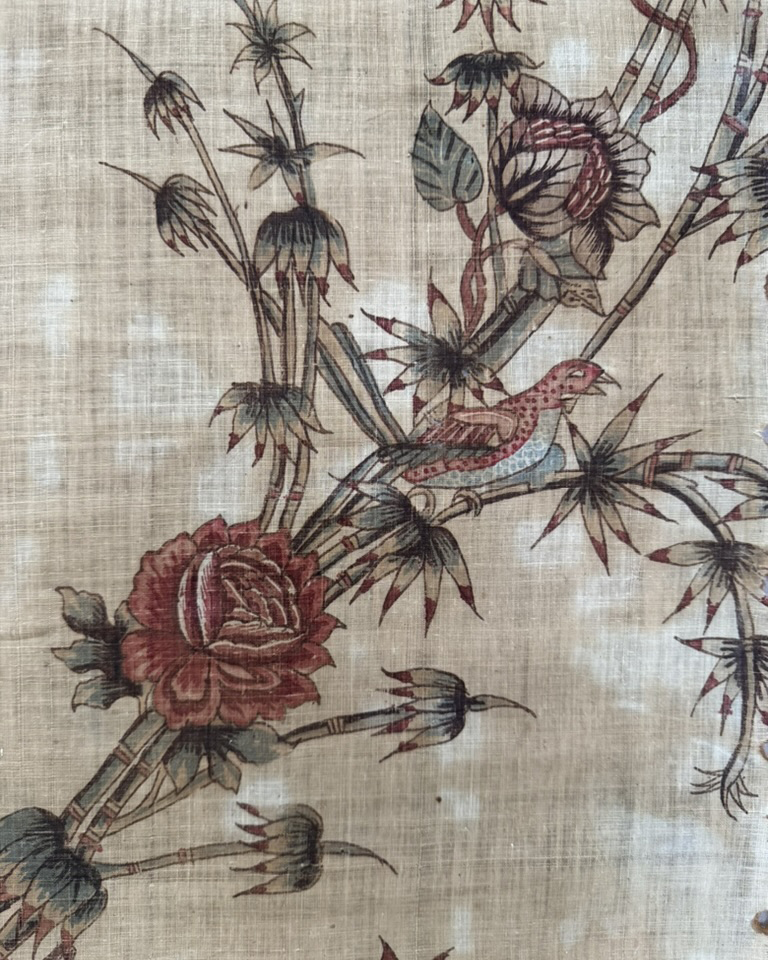
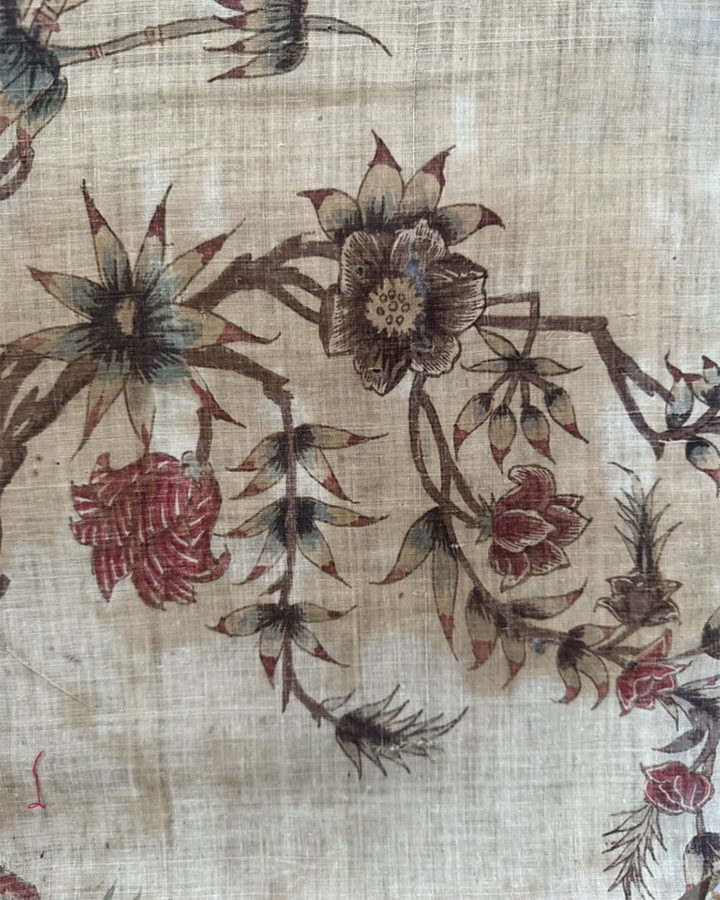
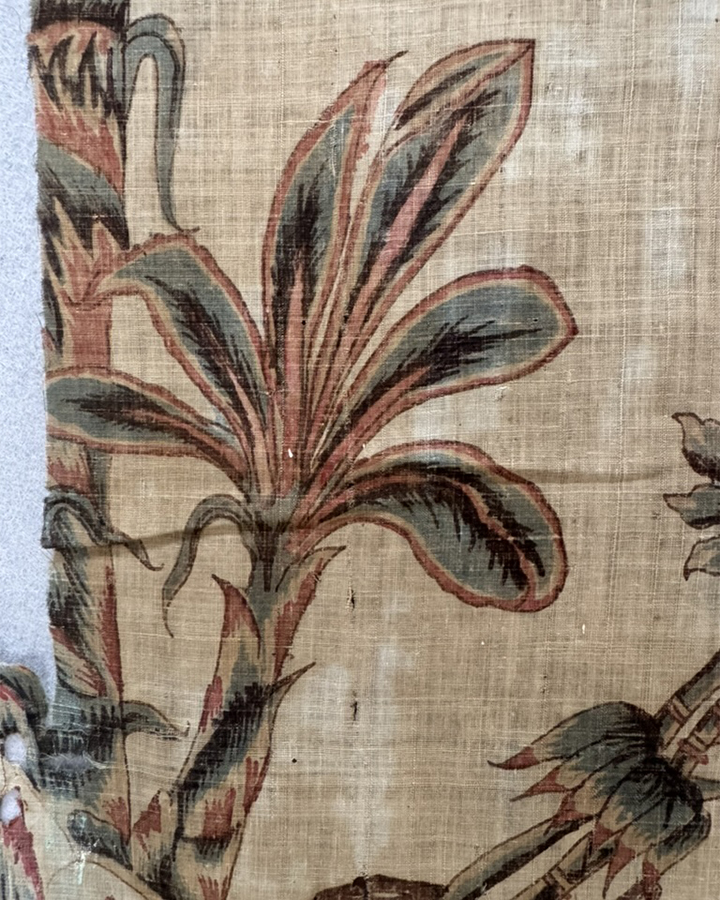
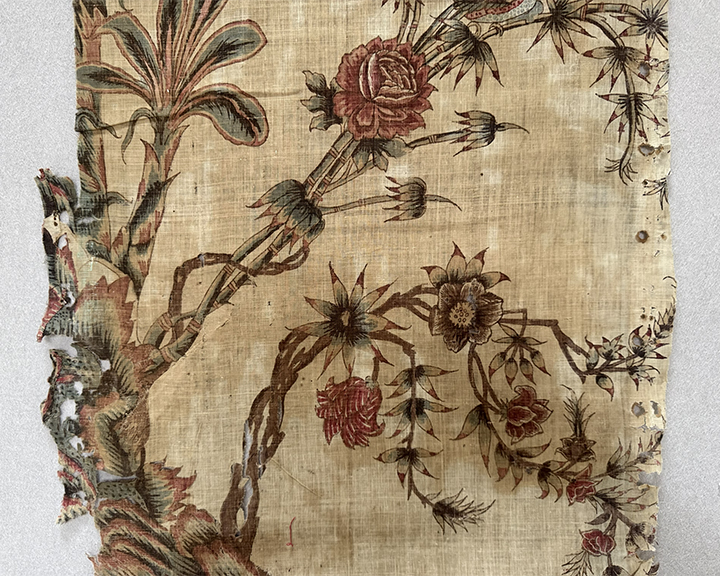
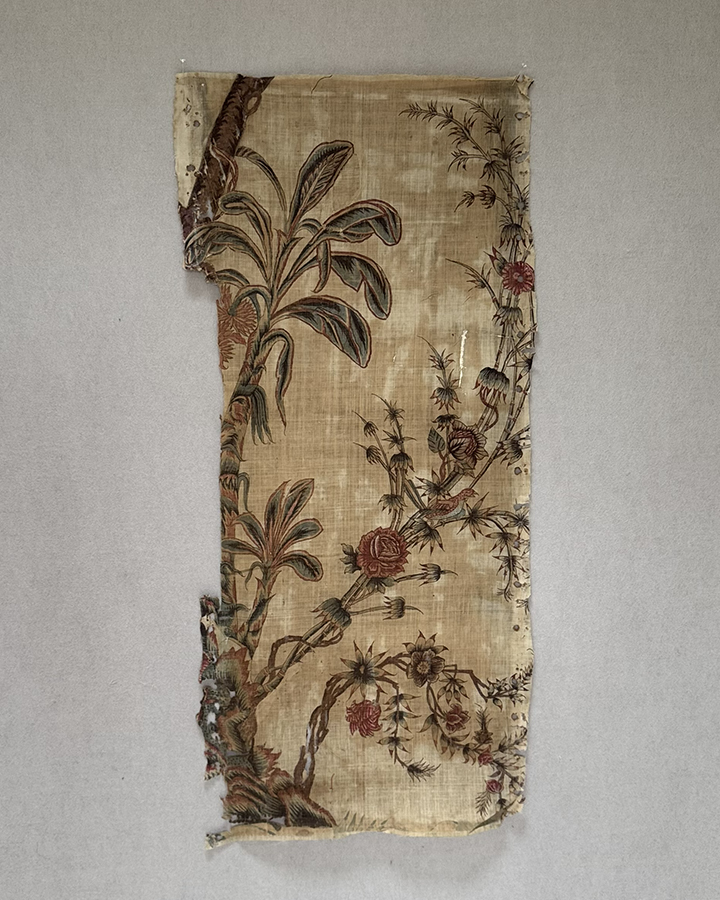
A panel hand painted with a quirky bird sitting on bamboo surrounded by leafy sprays, the citrus fruit motif just below, a pomegrante bursting with seeds, to the left hand side, the lower area with a peony, all painted in shades of blue, red and brown on a natural cotton ground.
37 x 10 in; 94 x 26 cm
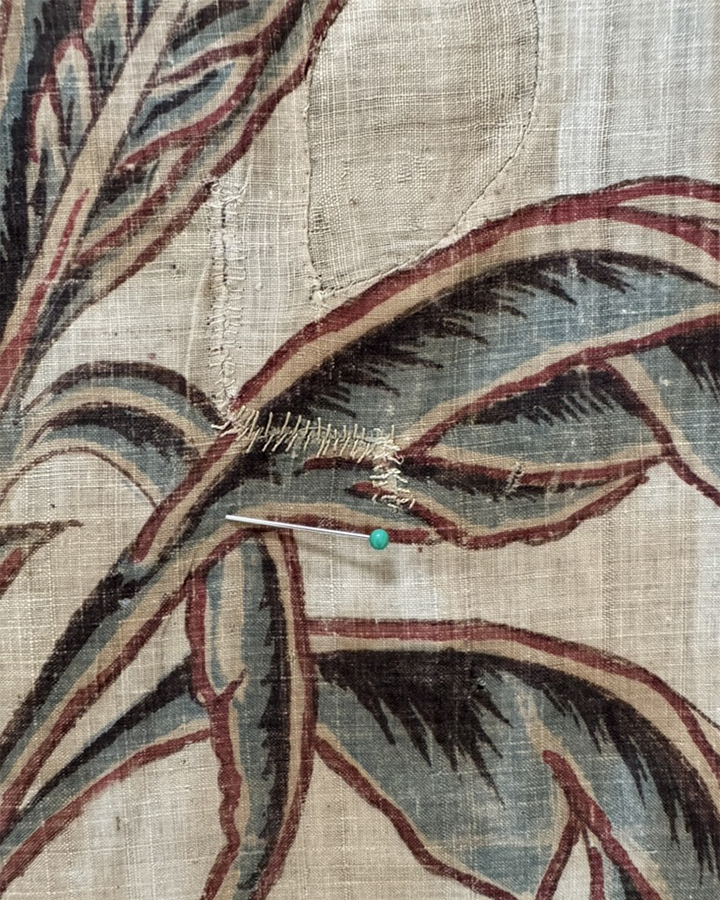
You wll clearly see the holes to two sides where it has been tacked to the walls of a room, probably a bedroom. There are more holes to the bird's body and the pomegranate and the other areas, which you should clearly be able to see. A very old and small darn on the bamboo, top right. You will see the ground fabric was originally much lighter, but exposure to the light causes slight discolouration. It is 250 years old! There are some conservation patches to the reverse.
I have had this piece washed by a conservator.


All images and text © meg-andrews.com 2026

Lengths of Indian hand painted mordant and resist dyed cotton were produed for the export market and used for palampores (bedcovers), and wall hangings in British country houses. They was produced on the Coromandel Coast, South-East India. This piece, with all the tack holes to two sides was clearly nailed to the walls of a bedroom, and would have had the bed curtains and coverlet in same fabric. How splendid the room would have looked, colourful and fresh, after heavy decor of velvet and wool hangings. Today in Britain I don't think there is a National Trust property or Stately Home that still has palampores on the walls. Look closely at the charming dragonfly and bird.
On early Indian textiles we often see Chinese motifs and influence. Chinese and British textiles were sent to India for copying at this time. Many palampores have entwined bamboo trees, which can be found on Chinese embroideries. The citrus fruit (citrus medica) motif which you can see on the top right hand side, is a Chinese symbol The Buddha's Hand, so called because is resimbles the classic position of the Buddha's hand with the index and little finger pointing upward. The fruit is inedible and has a very strong small, used for scenting rooms. It represents long life and wealth. The pomegranate, found on the lower left of the panel, is another Buddhist sign, symbolising the hopes of the family for numerous offspring. Bamboo is a symbol of resilience and the peony being considered the most important flower in China, represents, wealth, prosperity and nobility.