
Price: on request
Ref N°: 1471
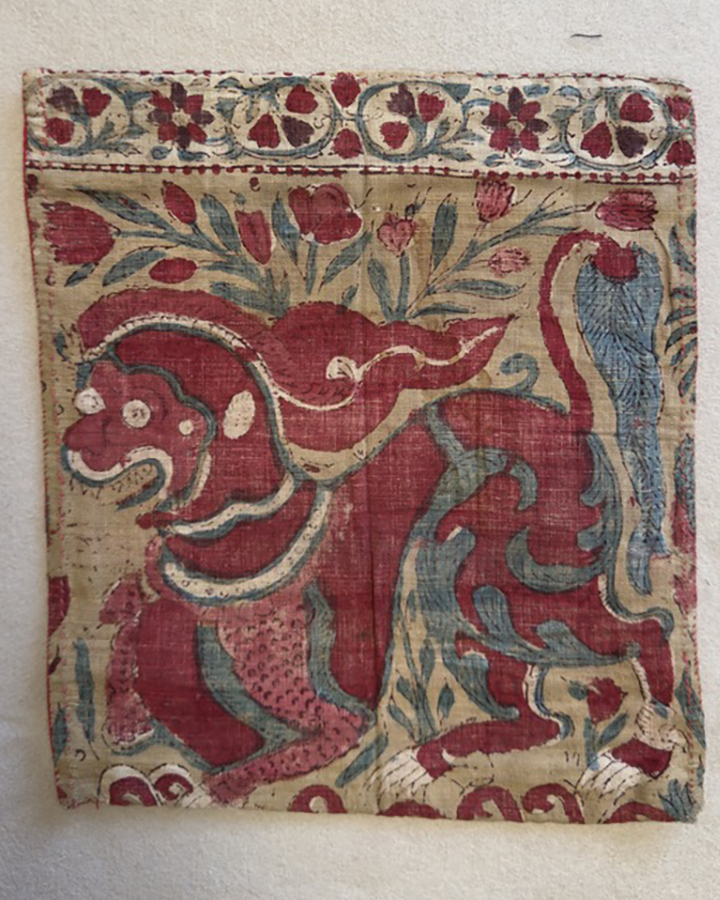
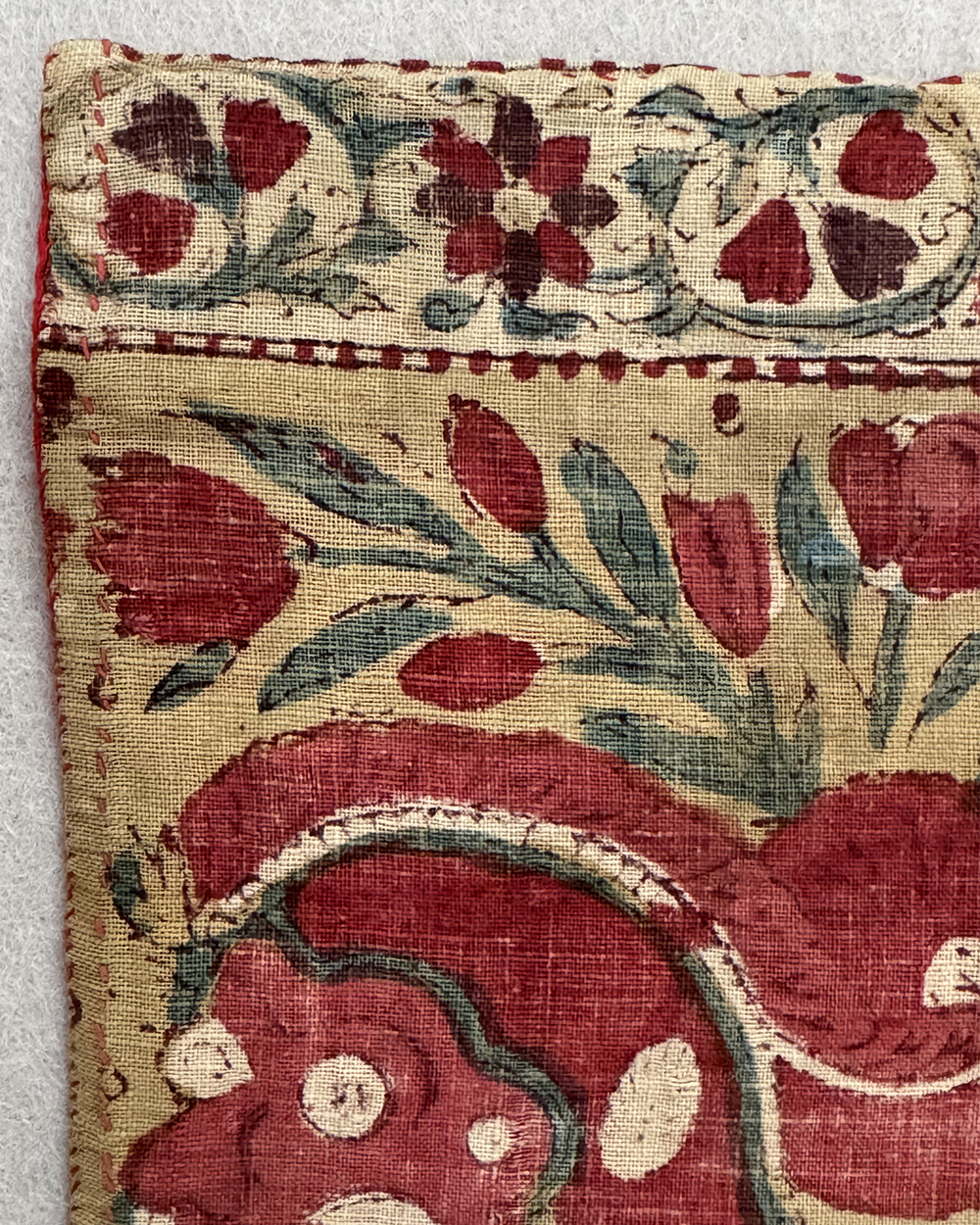
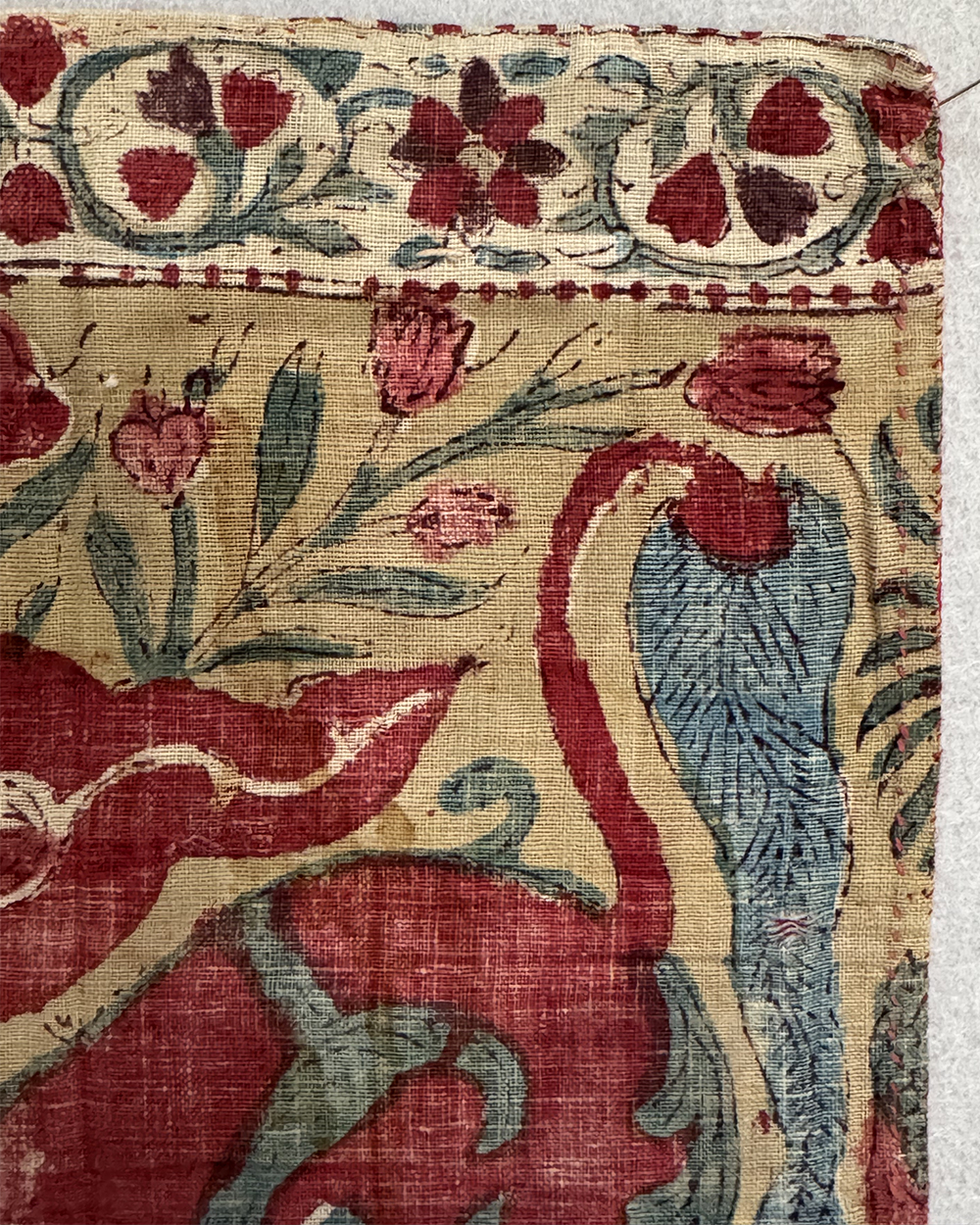
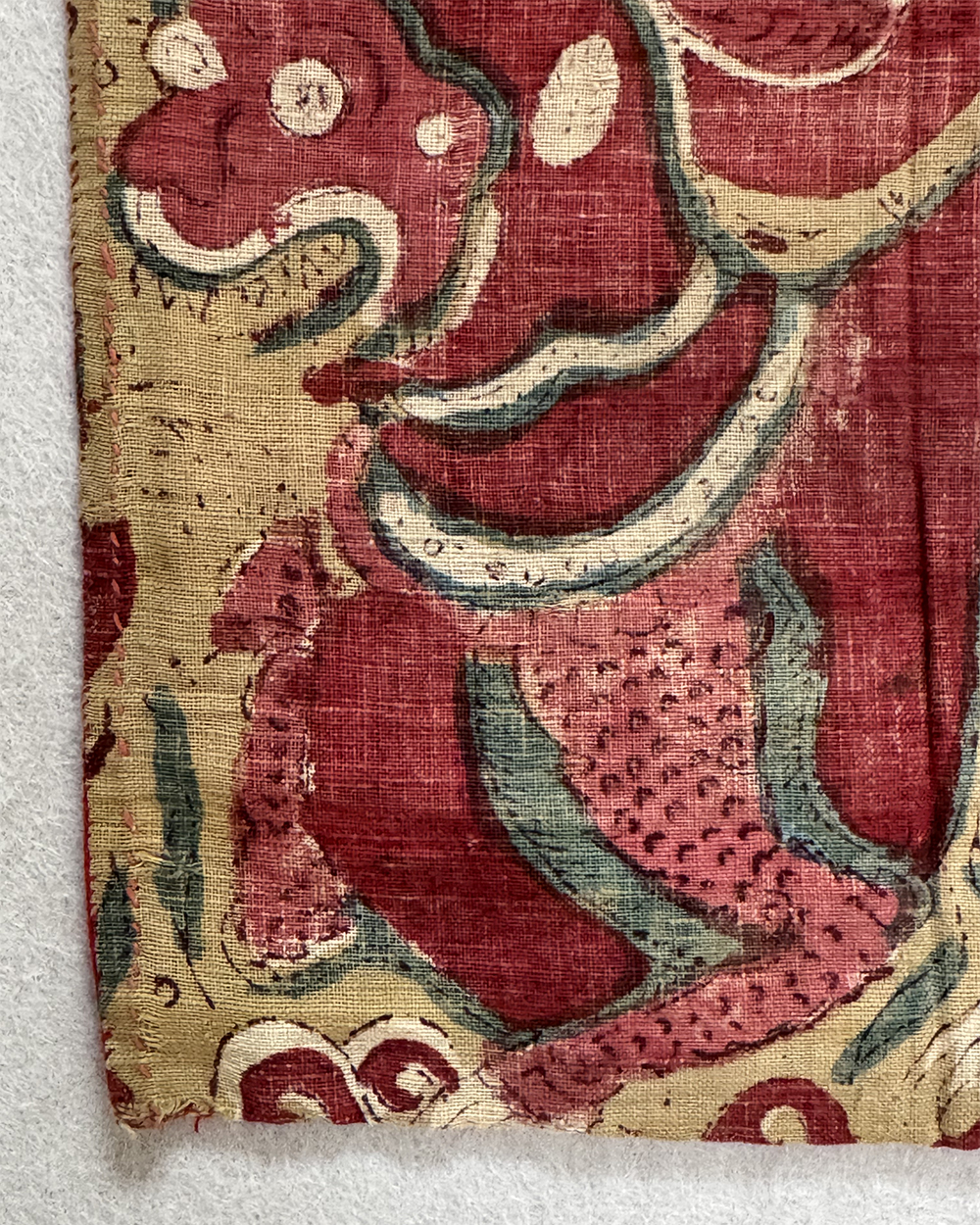
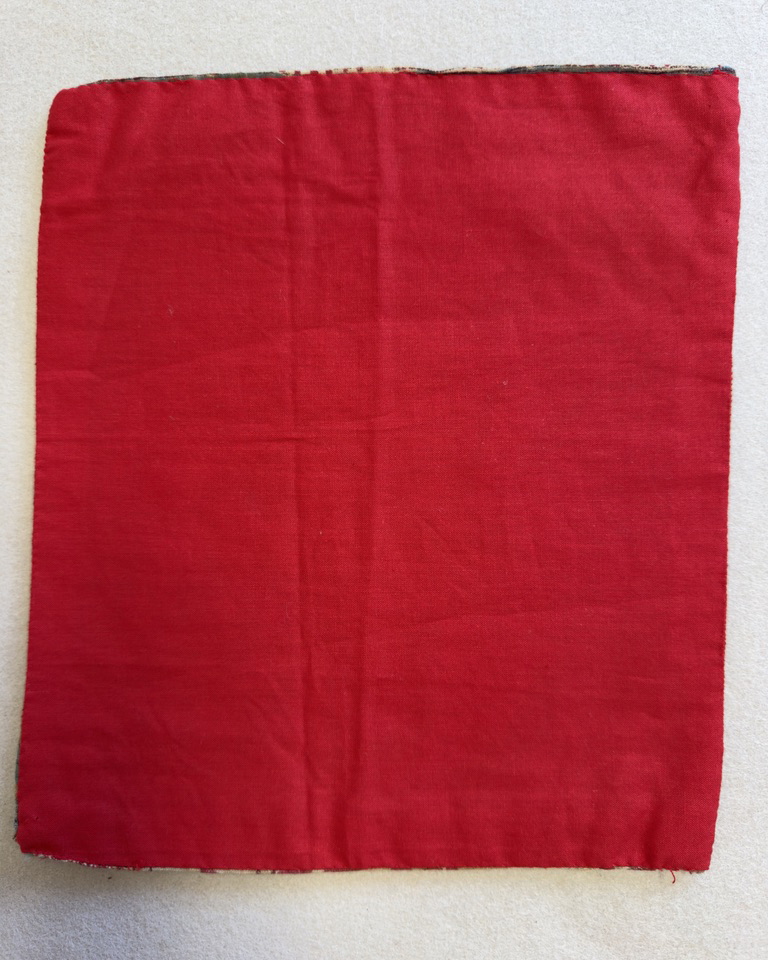
The large hand block printed kylin madder and indigo dyed surrounded by flowers and leaves on a buff coloured cotton ground, a small bird perches below, a stylised top border, with upright foliage, backed with plain red cotton.
91/2 x 8 1/2 in; 25 x 21 cm
Very good. Obviously slight fading.
* Master Dyers to the World Mattiebelle Gittenger p 177
Woven Cargoes John Guy plate 90/91.
Trade,Temple & Court Barnes, Cohen & Crill.
Sits. Katoen in bloei Gieneke Arnolli. p 54. Oh for this book to be in English!
Sits. Oost-West Relaties in Textiel Redactie Ebjeltje Hartkamp-Jonxis. p 101
for fragment with similar kylin 1650-1700, in Kyoto National Museum.
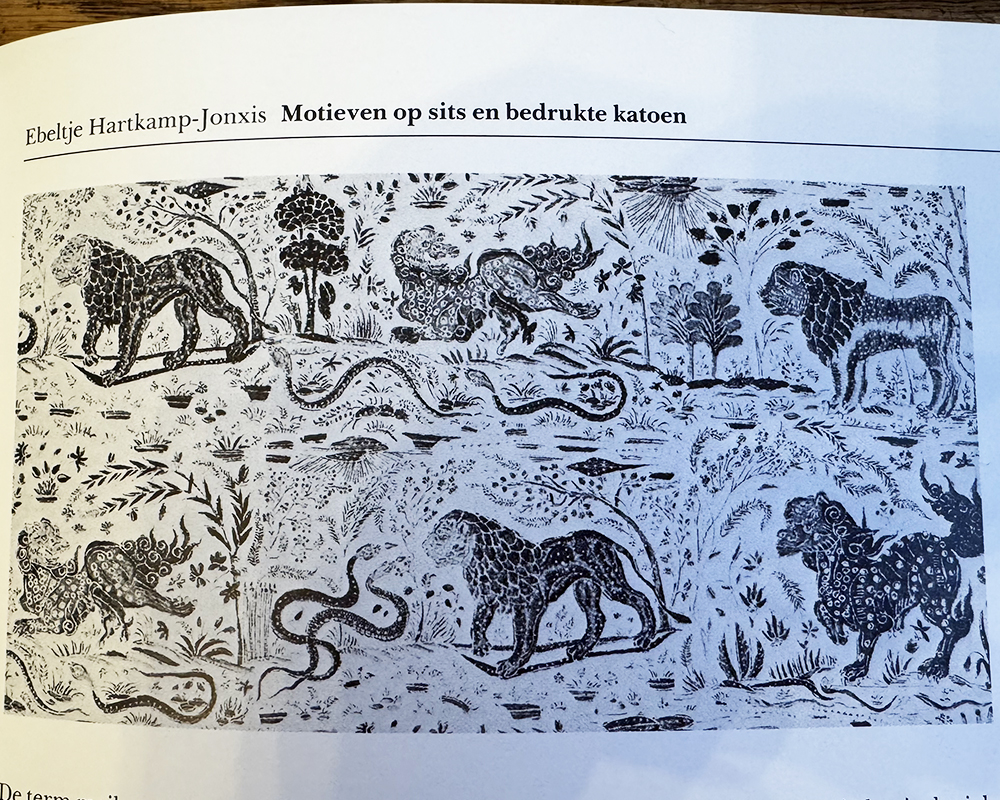
Images from " Trade , Temple & Court " Barnes , Cohen , Crill . 2002.
As you can see these much early trade textiles ( 15th to 17th C ) for Indonesia are crude block prints printed on course cotton from Gujarat .
in the TAPI collection (Tapi 01.31) there is a probably 17th century similar piece, traded to
Sulawesi, eastern Indonesia. Block printed cotton, mordant- dyed


All images and text © meg-andrews.com 2026

This piece has had quite a journey over the years. It was part of a large cotton hanging printed in Gujerat for the Indonesian market. One might ask why there is a kylin depicted, a Chinese mythical creature. The Chinese community arrived in Indonesia in the 13th century and Chinese motifs and animals are often represented on textiles. This trade cloth was exported to Indonesia by the Dutch East India Company (VOC) but at a later date returned to The Netherlands. Probably the piece was cut from a damaged hanging. These pieces were in demand as souvenirs & curiosities in the 17th 18th centuries. It found its way to Marken, Northern Holland, where early chintz fabrics were treasured by the rural communities. They were cut up and reused as the fronts of women's bodices, and became part of thier regional dress. The Fries Museum at Leeuwarden shows that garments were cut from palampore and yardage. Wealthy families seem to have stored great quantities of the Indian textiles for making the costumes long after the cloth was actually patterned in India.*