Pair Samoa Barkcloth Panels late 19/early 20th century
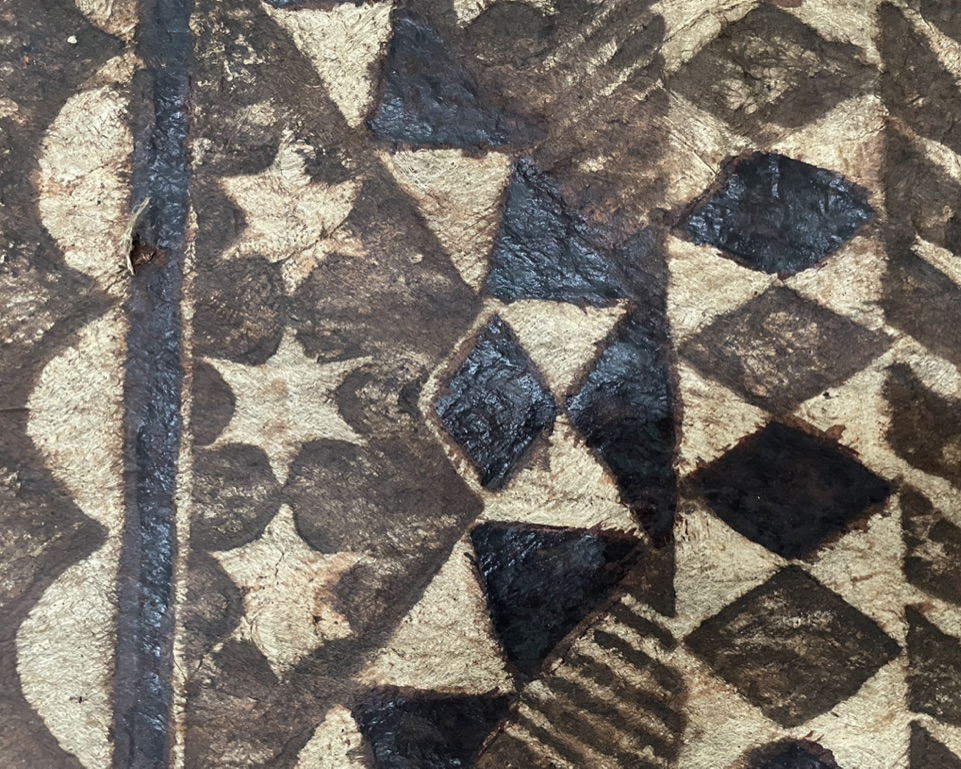
The pattern and colouring is typical of Samoa in Polynesia, where the barkcloth is known as siapo but often refered to as tapa cloth. Produced by women, from the soft inner bark of the paper mulberry tree, which are beaten, glued and felted to produce large sheets, which are then painted by hand with natural pigments. Used in everyday and ceremonial life, often exchanged as gifts as garments or gift coverings. The cloth still plays an important part in today's rituals.





The pattern and colouring is typical of Samoa in Polynesia, where the barkcloth is known as siapo but often refered to as tapa cloth. Produced by women, from the soft inner bark of the paper mulberry tree, which are beaten, glued and felted to produce large sheets, which are then painted by hand with natural pigments. Used in everyday and ceremonial life, often exchanged as gifts as garments or gift coverings. The cloth still plays an important part in today's rituals.